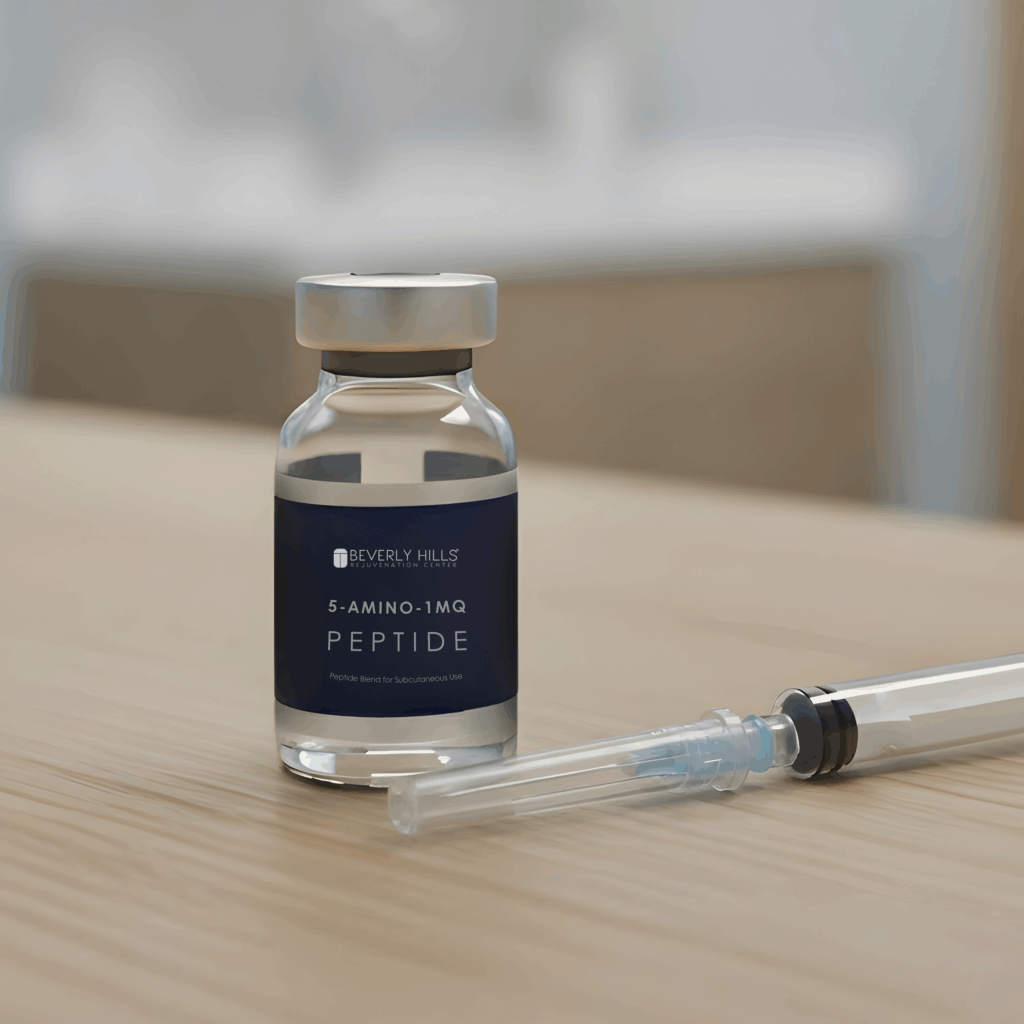
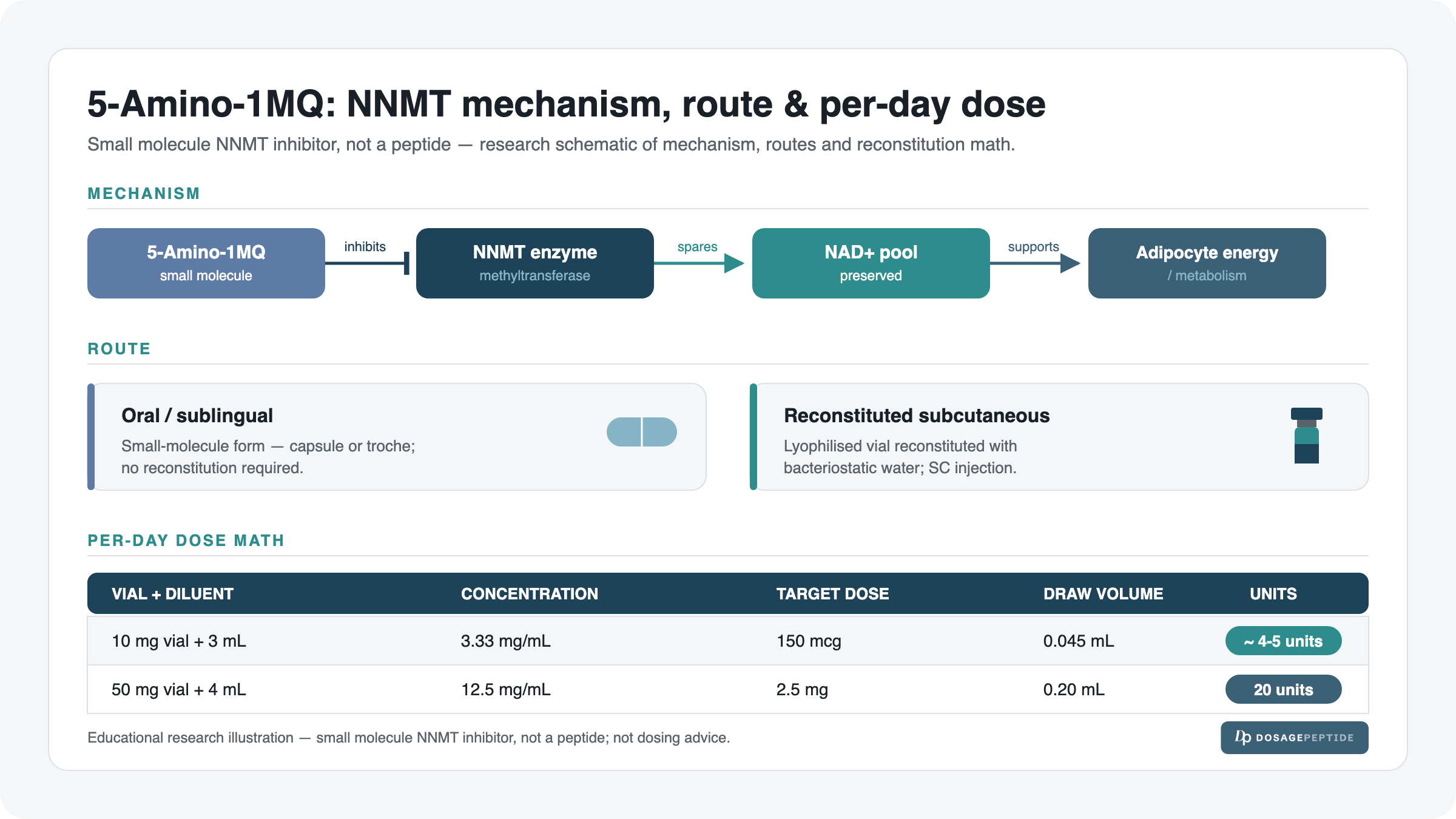
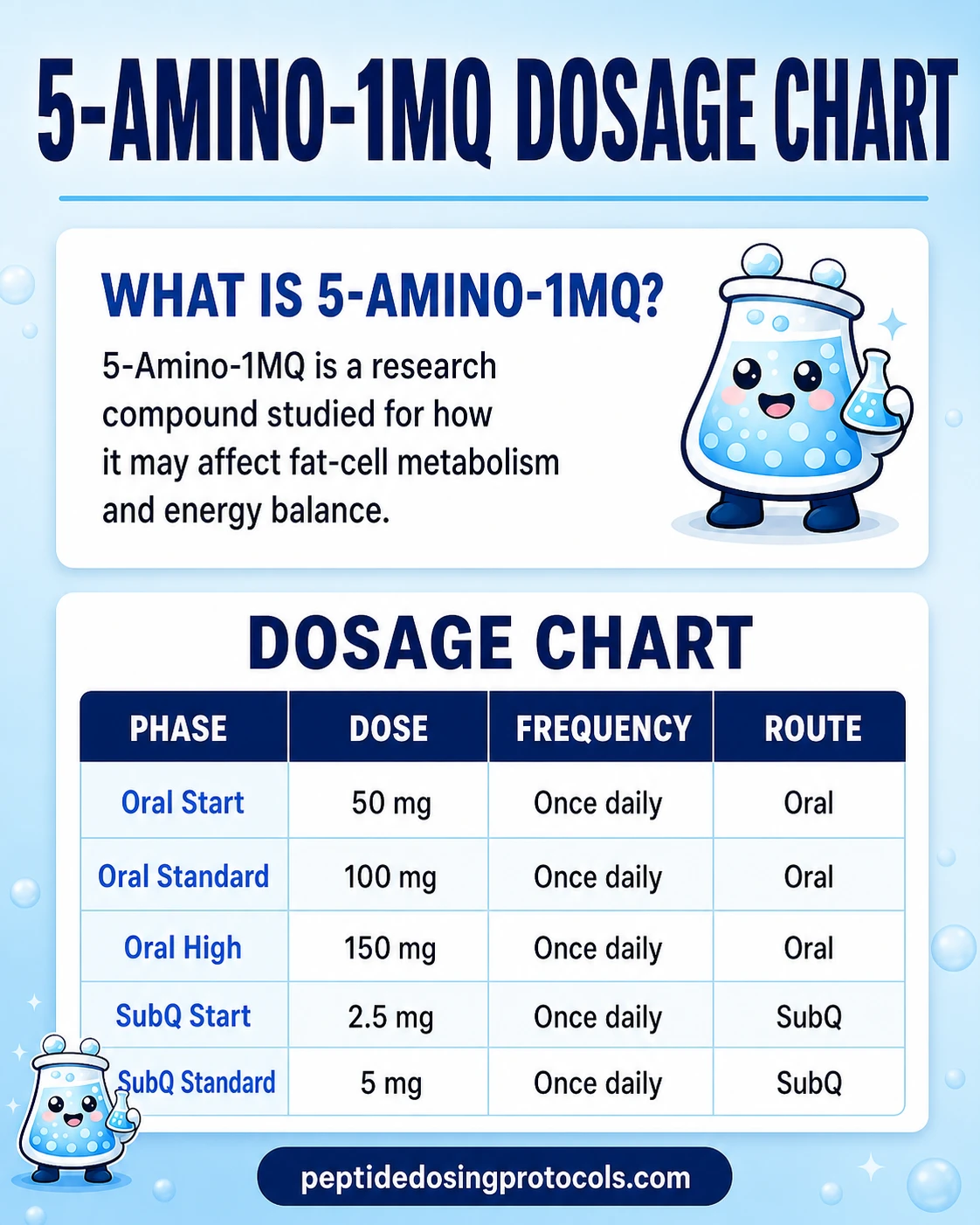
5 amino 1mq subq dose 5-AMINO-1MQ 5-Amino-1MQ Dosage: How Much Per
Description
Insulin resistance, which both causes and is caused by visceral fat, creates a metabolic trap where the body preferentially stores energy as belly fat while struggling to release it
Animal studies examining cartilage integrity have noted potential improvements in matrix composition and joint flexibility during recovery periods, making it a research candidate in post-injury musculoskeletal models
Similarities between insulin and IGF-1 suggest the possible role of IGF-1 in the pathological process of this syndrome, therefore several studies have attempted to correlate IGF-1 plasma levels with MetS

Chemical Makeup (1)(2)(3) Molecular Formula: Tesamorelin: C 221 H 366 N 72 O 67 S CJC-1295 (Mod GRF 1-29): C 152 H 252 N 44 O 42 Ipamorelin: C 38 H 49 N 9 O 5 Molecular Weight: Tesamorelin: 5136 g/mol CJC-1295 (Mod GRF 1-29): 3367.9 g/mol Ipamorelin: 711.8 g/mol Sequence Tesamorelin: Unk-Tyr-Ala-Asp-Ala-Ile-Phe-Thr-Asn-Ser-Tyr-Arg-Lys-Val-Leu-Gly-Gln-Leu-Ser-Ala-Arg-Lys-Leu-Leu-Gln-Asp-Ile-Met-Ser-Arg-Gln-Gln-Gly-Glu-Ser-Asn-Gln-Glu-Arg-Gly-Ala-Arg-Ala-Arg-Leu-NH2 CJC-1295 (Mod GRF 1-29): L-tyrosyl-D-alanyl-L-alpha-aspartyl-L-alanyl-L-isoleucyl-L-phenylalanyl-L-threonyl-L-glutaminyl-L-seryl-L-tyrosyl-L-arginyl-L-lysyl-L-valyl-L-leucyl-L-alanyl-L-glutaminyl-L-leucyl-L-seryl-L-alanyl-L-arginyl-L-lysyl-L-leucyl-L-leucyl-L-glutaminyl-L-alpha-aspartyl-L-isoleucyl-L-leucyl-L-seryl-L-argininamide Ipamorelin: alpha-methyl-alanyl-L-histidyl-3-(2-naphthyl)-D-alanyl-D-phenylalanyl-L-lysinamide Other Known Titles CJC-1295 (Mod GRF 1-29): CJC 1295 with DAC Ipamorelin: Ipamorelin Acetate Research and Clinical Studies Tesamorelin & CJC-1295 (Mod GRF 1-29) & Ipamorelin Blend and the Pituitary Gland The Tesamorelin & CJC-1295 (Mod GRF 1-29) & Ipamorelin peptide blend appear to exhibit significant interactions with the pituitary gland, seemingly exerting potential impact through specific receptor binding and subsequent modulation of growth hormone (GH) release
NAD + is mainly consumed in three ways, in which NA is produced, and 4 enzymes, sirtuins, ADP-ribosyl transferases (ARTs), poly-ADP-polymerases (PARPs), and cADP-ribose synthases, are involved (Figure 1)